
Ask ten slot players what RTP means and you'll get ten different answers, most of them wrong. "It's the percentage of my bankroll I get back" is the most common one, and it's technically sort of true — over millions of spins, not over your Tuesday night session. This distinction, boring as it sounds, is the single biggest thing separating players who treat slots as entertainment from players who treat them as a savings account. Let's dig into what the numbers actually mean, and what they don't.
Return to Player is calculated over an enormous sample size — typically hundreds of millions of simulated spins. A slot with a 96% RTP will, over that theoretical infinity, pay back 96 cents for every euro, dollar, or pound wagered. The house edge is the other 4%. Simple enough.
What trips people up is that variance sits on top of RTP like weather on top of climate. You can hit a 2,000x max win on your third spin or grind for four hours and never trigger a bonus. Both outcomes are consistent with the same 96% RTP. The machine doesn't owe you a top-up because your session went badly. There is no memory. Every spin is an independent event governed by a random number generator that doesn't know your name, your balance, or your hopes.
A practical takeaway: compare RTP across games before you commit. The same developer might ship one slot at 96.5% and another at 94.2%. Over a thousand spins at €1 per spin, that gap is roughly €23 in expected loss — not life-changing, but it's free money you're leaving on the table by not checking.
Two slots with identical RTP can feel completely different depending on their volatility profile. High-volatility slots concentrate payouts into rare, large wins. Low-volatility slots drip-feed smaller, more frequent returns. Neither is "better" — they suit different bankrolls and different temperaments.
If you're playing at €0.20 per spin with a €50 bankroll, a 5,000x max-win slot is a poor fit — not because it's rigged, but because 250 spins won't reliably hit the pay-dirt. Pick volatility that matches your tolerance for dry spells.
Slots are the honest part of the casino because there's no strategy to fool yourself with. You press a button, the RNG does its thing, and the math plays out over time. Table games are a different animal, and this is where most self-styled "system" players quietly light money on fire.
Blackjack played with optimal basic strategy reduces the house edge to around 0.5%, one of the tightest games in the building. Play it badly — hit on 16 against a dealer 10, split tens, chase losses — and that edge can balloon to 2% or more. The rules matter too. A single-deck game paying 3:2 on blackjack is far kinder than a six-deck game paying 6:5, even though most casual players don't notice the difference on the felt.
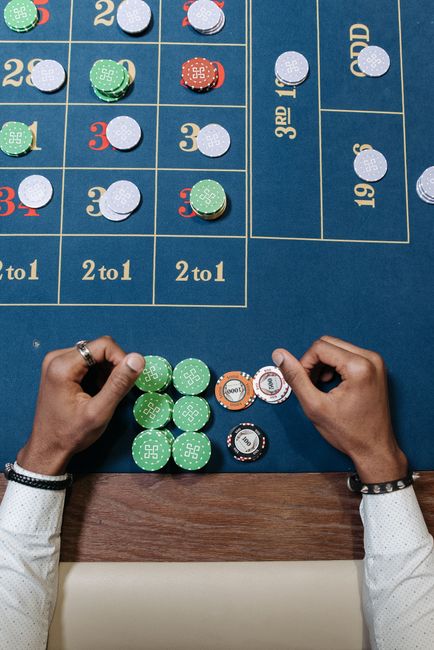
Roulette splits neatly: European (single zero) gives a 2.7% house edge, American (double zero) gives 5.26%. That's nearly double the expected loss, for no extra thrill. If you have the choice, always sit at the European wheel.
Poker is a skill game with a rake, not a house-edge game. In cash games, your edge comes from opponents' mistakes, not from the dealer. That means the math is about pot odds, position, and identifying who at the table is bleeding chips — and whether you can sit to their left. king 88 covers this in more detail.
A few concrete rules worth internalizing:
Tournaments add a wrinkle: the payout structure means survival has value independent of chip count, so the chip-EV math shifts near the bubble. If you're not adjusting for ICM (Independent Chip Model), you're leaving money in the prize pool.
Welcome bonuses look generous until you read the wagering requirement. A 100% match up to €500 with a 35x wagering requirement attached to the bonus plus deposit means you're looking at €35,000 in wagers before you can withdraw. At a 96% RTP slot, the expected grind is roughly €1,400 in theoretical loss — which is more than the bonus itself.
Sticky vs. non-sticky bonuses matter enormously. A sticky bonus stays tied to your account and comes off the top of any withdrawal. A non-sticky bonus can be released once you've cleared the rollover. Read which one you're getting before you opt in.
Also check game weighting. Many casinos count slots at 100% toward wagering but weight table games at 10% or exclude them entirely. Your favourite blackjack table might contribute almost nothing to clearing the requirement.
Almost nobody beats a casino at slots or roulette. The house edge guarantees it over time. The people who walk away ahead are overwhelmingly — and unreliably — just lucky. The people who stay solvent, though, share a few habits:
That last one is the kicker. The math is stacked, the RNG doesn't care about you, and the only guaranteed outcome is the house edge holding over time. Play the games that entertain you, understand that you're paying for the experience, and you'll never be blindsided by a losing streak you thought you could outsmart.
Slots are an entertainment product. Poker is a skill game with a rake. Blackjack can be near-even with perfect play. Sports betting is roughly 5% vig at best, though sharp bettors who line-shop can push closer to break-even over thousands of wagers. Knowing which category you're playing is the difference between an expensive hobby and a delusional one.

Hi, my name is Anthony kuber. I am artist and fashion designer.
I love to travel and writing blogging.
Your email address will not be published. Required fields are marked *
Software Developer & Writer
Hey, I'm Diva, a developer and writer blending code and creativity. I'm driven by a deep curiosity and a relentless pursuit of excellence. Join me as I craft digital solutions and captivating stories.


