
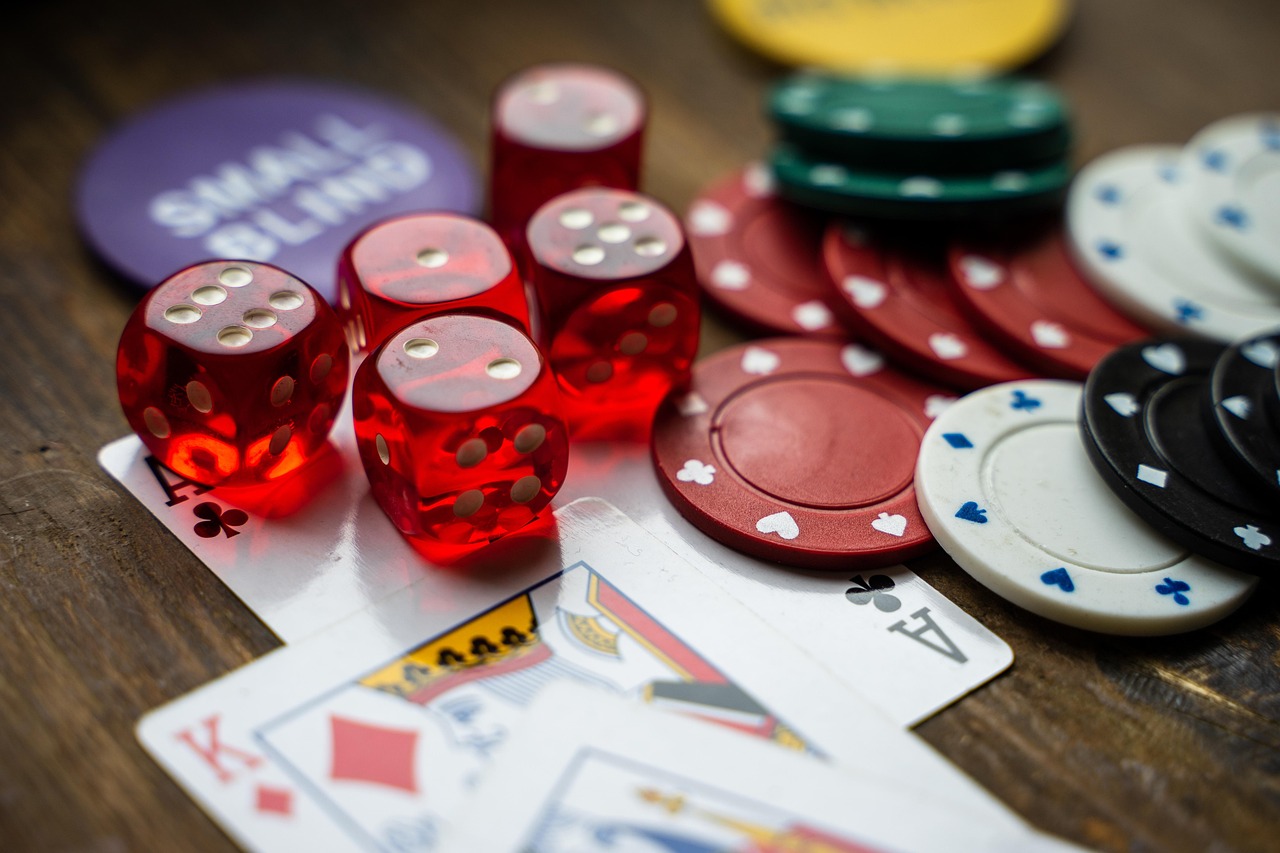
There's a moment every slots player knows. The reels stop, three scatters land, and the screen erupts. For ten seconds you're a genius. Then a quiet voice asks: was that skill, or was that math? In iGaming, the answer is almost always math — and understanding that math is what separates players who last from players who chase.
Whether you're spinning slots, grinding poker tables, or scanning betting lines, the games are built on probability. The house edge isn't a rumor; it's an engineering spec. Here's how the machinery actually works, and how to use that knowledge instead of fighting it.
Every casino game has a built-in mathematical advantage for the operator. It's rarely dramatic. That's the trick. A house edge of 2% feels invisible in a single session but becomes inevitable over thousands of bets.
Notice the pattern? The games with the smallest edge — blackjack, baccarat, certain video poker variants — reward players who learn basic strategy. The games with the largest edge — slots, keno, some side bets — reward the casino. That doesn't mean slots are bad. It means you're paying for entertainment with a known tax rate. Know the tax before you buy the ticket.
Slot machines use a Random Number Generator. Every spin is independent. The machine has no memory of your last 200 losing spins. It doesn't know you're "due." It doesn't care that you're on a hot streak. Each outcome is drawn from a fixed probability distribution defined in the game's PAR sheet.
Two numbers matter more than the RTP (return to player) percentage:
Here's a concrete example. Slot A pays 96% RTP with a 10x maximum win. Slot B pays 96% RTP with a 50,000x maximum win. Both are "fair" by the spec. But Slot A will drain your bankroll slowly and predictably. Slot B will drain it fast and then, occasionally, change your month. Choose based on your bankroll, not your mood.
Check the game's RTP before you play. Most regulated operators publish it in the help screen. If a slot shows 94% instead of 96%, that two-point gap is massive over time — it's the difference between paying $4 and $6 per $100 wagered. On a $5,000 monthly turnover, that's $100. Real money, not trivia.
Poker is the exception in the casino floor because you're not playing against the house. You're playing against other players, and the house takes a rake. That means a skilled player can achieve a positive expected value — something impossible in pure chance games. https://winvn.company/ covers this in more detail.
But "skilled" is doing a lot of work in that sentence. The modern poker ecosystem is brutal at the micro stakes and sharper than ever at the mid stakes. To win, you need three things:
A concrete data point: in a 6-max $1/$2 No-Limit Hold'em game, a strong winning player might make 5 to 10 big blinds per 100 hands. That's $10 to $20 per 100 hands. The same player at $0.10/$0.25 makes $0.50 to $1.00 per 100 hands. The skill is transferable; the stakes determine whether it's income or hobby.
Betting markets are efficient. That's the bad news. The good news is they're not perfectly efficient — especially in niche markets, lower-tier leagues, and live in-play windows.
The standard vig (vigorish or juice) on a point spread is -110 on both sides, implying a 52.4% break-even rate. That means a bettor who wins 52.4% of bets breaks even. To profit, you need to hit 53% or better over a large sample.
How do sharp bettors find that edge?
You can be the best poker player in your city and go broke in a month with bad bankroll management. You can be an average slots player and last a year with disciplined limits. The math rewards survival.
Here's a framework that works across iGaming:
Bonus-specific tip: always read wagering requirements before claiming a bonus. A 100% match with 40x wagering on slots and a 100% match with 25x wagering are not the same offer. The first is a trap dressed as generosity; the second is genuinely valuable.
iGaming is not a battle against luck. It's a negotiation with probability. The house edge, the rake, the vig, the volatility — these are the parameters of that negotiation. You can't change them. You can only understand them and decide whether the deal is worth taking.
The players who last aren't the ones who get lucky. They're the ones who treat RTP, variance, and bankroll rules as seriously as the games themselves. They know that a 96% RTP slot and a 53% win-rate betting strategy are not magic; they're math. And math, unlike a hot streak, is something you can plan around.
So next time the reels stop and the screen erupts, enjoy the moment. But don't confuse it with strategy. The math was always running in the background — and it's the only thing you can actually count on.

Hi, my name is Anthony kuber. I am artist and fashion designer.
I love to travel and writing blogging.
Your email address will not be published. Required fields are marked *
Software Developer & Writer
Hey, I'm Diva, a developer and writer blending code and creativity. I'm driven by a deep curiosity and a relentless pursuit of excellence. Join me as I craft digital solutions and captivating stories.


